Single-Deck Blackjack: Rules, Strategy and Probability
This guide explains single-deck Blackjack rules, decisions and probability. It does not confirm that 2222bet currently offers this specific table or rule set; check the relevant lobby and table rules before relying on any availability claim.
Dealer
Player

- Card values determine the hand total
- The dealer’s upcard affects the decision
- Check table rules before playing
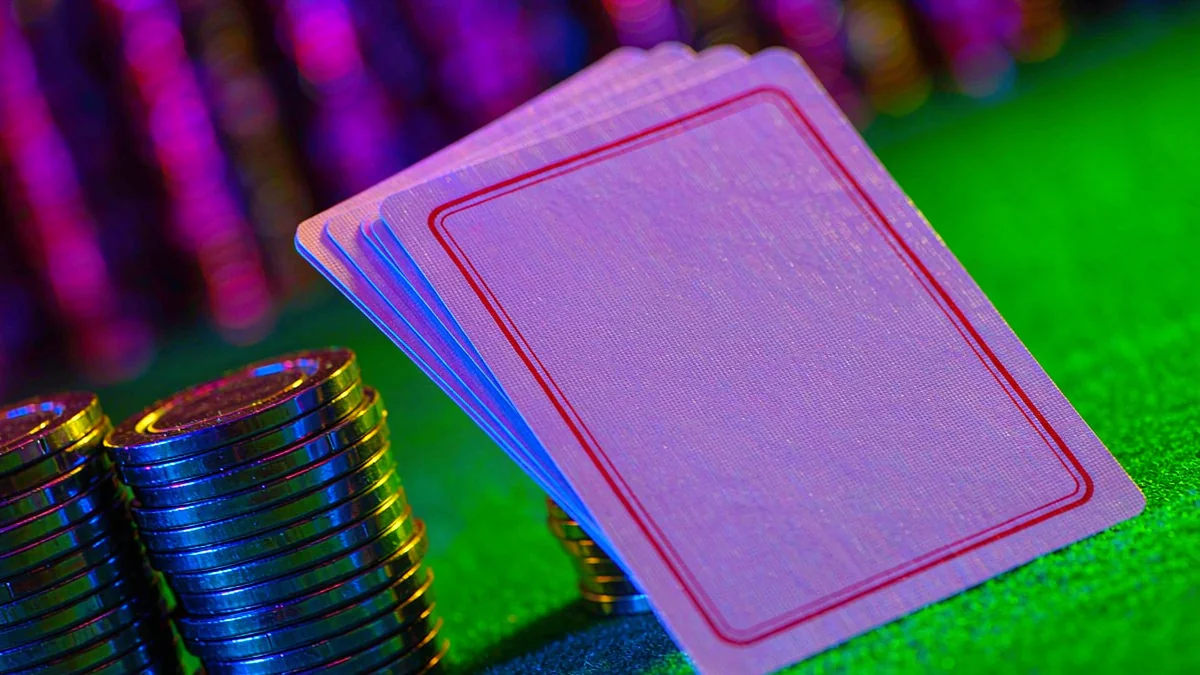
General Blackjack illustration; it is not a verified 2222bet screenshot or a confirmed live table.
How to play single-deck blackjack
Learn the general flow; exact table rules may differ
Set your stake
Check the table minimum and maximum, then choose a stake. Set a fixed budget first and do not increase bets to recover losses.
Receive the opening cards
The player and dealer normally receive two cards each. One dealer card is visible; how the other is handled can vary by game format.
Choose an action
Use your total and the dealer's upcard to choose Hit, Stand, Double Down or Split. Available actions depend on the table rules.
Resolve the hand
A hand normally wins by finishing above the dealer without exceeding 21. Equal totals may produce a push. Verify all settlement rules, including the blackjack payout, at the table.
Basic strategy overview
The chart must match the deck count and exact table rules
| Your hand | Dealer 2–6 | Dealer 7–8 | Dealer 9–10 | Dealer A |
|---|---|---|---|---|
| 8 or less | Hit | Hit | Hit | Hit |
| 9 | Double or Hit | Hit | Hit | Hit |
| 10 | Double or Hit | Double or Hit | Hit | Hit |
| 11 | Double or Hit | Double or Hit | Double or Hit | Hit |
| 12 | Stand | Hit | Hit | Hit |
| 13–16 | Stand | Hit | Hit | Hit |
| 17 or more | Stand | Stand | Stand | Stand |
| A-A / 8-8 | Split | Split | Split | Split |
Strategy-chart caution
This compact table is not a complete basic-strategy chart. Decisions change with rules such as dealer action on soft 17, whether Double After Split is allowed, and the blackjack payout. Use a full chart that matches the table.

- Hit to request another card
- Stand to keep the current hand
- Double only when the rules and hand support it
General instructional illustration, not a representation of a specific operator interface.
Common outcomes and payouts
These ratios are common examples; check the exact table payout before playing
| Outcome | Meaning | Common settlement | What to verify |
|---|---|---|---|
| Blackjack | An Ace and a 10-value card as the first two cards | Often 3:2; sometimes 6:5 | The table's stated ratio |
| Regular win | A higher total than the dealer without exceeding 21 | Usually 1:1 | Original stake plus an equal win |
| Insurance | A separate side bet when the dealer shows an Ace | Usually 2:1 | Only if the dealer has blackjack |
| Push | The player and dealer finish with equal totals | Stake usually returned | Normally no win or loss |
| Bust | The hand total exceeds 21 | Stake loses | The hand ends before the dealer's result |
Single-deck vs multi-deck blackjack
How deck count affects play and strategy
| Feature | Single deck | Multiple decks |
|---|---|---|
| Number of cards | 52 cards before shuffling | Several decks combined |
| Tracking card composition | Relatively easier | Relatively harder |
| Probability changes | Removed cards have more influence | Removed cards have less influence |
| Double Down rules | Check the table rules | Check the table rules |
| Basic strategy | Use a single-deck chart | Use a chart matching the deck count |
| For beginners | Card composition is easier to understand | Core rules are similar, but charts may differ |
- Splitting creates two separate hands
- Insurance is a separate side bet
- Side bets do not remove game risk
General Blackjack concept illustration; no specific payout or interface is implied.
Single-deck blackjack essentials
Single-deck blackjack uses one 52-card deck. The aim is to finish closer to 21 than the dealer without going over. A specific single-deck table or rule set at 2222bet is not confirmed, so check the table information before playing.
Before deciding, check whether the dealer stands or hits on soft 17, the blackjack payout, Double Down and Split conditions, and when the deck is shuffled. These rules change basic strategy and the house edge; correct decisions still cannot guarantee a win.
Understanding card values
Cards 2 through 10 count at face value, while J, Q and K count as 10. An Ace counts as 1 or 11, whichever keeps the hand valid. A hand where an Ace can remain 11 without exceeding 21 is soft; otherwise it is hard.
When should you consider Double Down?
Double Down normally doubles the initial stake in exchange for exactly one more card. The correct choice depends on your hand, the dealer's upcard and the table rules. Consult a matching single-deck strategy chart and first confirm which hands permit Double Down.
Splitting paired cards
Splitting turns two equal-value starting cards into separate hands, each with its own stake. Strategy commonly supports splitting Aces and 8s, while breaking a strong total of 20 from paired 10-value cards is generally avoided. Check whether resplitting or Double Down after a split is allowed.
Is insurance a sensible bet?
Insurance may be offered when the dealer shows an ace. It is a separate side bet that pays only if the dealer has blackjack. The proportion of ten-value cards remaining is usually below the break-even point for insurance, so basic strategy normally rejects it. A specific single-deck table and its rules at 2222bet have not been confirmed; check the table's help screen before playing.
Tracking cards in a single deck
A complete deck contains 52 cards, but what matters is how often the table shuffles or whether it resets the deck after each round. The Hi-Lo system assigns +1 to 2–6, 0 to 7–9 and -1 to 10–ace. It only estimates the composition of the remaining cards and never guarantees a win. Frequent shuffling at an online table can make the count ineffective, and the table rules should always be checked first.
Key probability checks
Keep in mind
The house edge and the probability attached to any decision depend on the payout, whether the dealer hits or stands on soft 17, restrictions on doubling and splitting, and the shuffle method. No single percentage applies to every single-deck table. Read the complete rules and set a loss limit before staking money.
Five checks before joining a table
- Check blackjack and ordinary-win payouts
- Check whether the dealer hits or stands on soft 17
- Verify the minimum and maximum stake
- Read the doubling and splitting restrictions
- Review shuffle and disconnection rules
Budget tip
Set time and money limits before every session. Do not increase stakes to recover losses, and do not use borrowed money. Stop when the preset limit is reached; basic strategy can reduce decision errors, but it cannot remove the risk of loss.
2222bet and Blackjack probability: understanding odds without promises
The linked reference discusses probability in betting contexts. It is useful for understanding why an expected result is not a promise about the next hand, but it is not a 2222bet product demonstration or endorsement.
Before making a decision in a card game, separate three things: the rules, the probabilities and the conditions at the actual table. A single deck does not by itself establish the payout, dealer rules or house edge.
This guide explains single-deck blackjack; whether a particular table is currently offered must be checked against the operator’s current lobby and table rules.
Use the video as general probability education, then verify every table rule separately.
MindYourDecisions · English · Watch on YouTube
- Random outcomes remain uncertain
- Rules change the mathematical edge
- No strategy guarantees a win
How to assess single-deck table rules
Reported 2222bet categories include live casino, but a single-deck blackjack table, its provider and its exact rules are not confirmed. Use the table help or paytable to verify the points below.
What one deck means
Single-deck blackjack uses one 52-card deck. However, the point at which the cards are shuffled varies by table and matters when assessing probabilities.
What shapes the house edge
Fewer decks do not automatically guarantee the lowest house edge. The blackjack payout, soft-17 rule, doubling, splitting, surrender and shuffle method collectively determine the table's mathematical advantage.
Reading rules on mobile
Before playing on mobile, open the help panel and read the payouts, button functions and confirmation steps. Recheck the stake before submitting it on a small screen, and use a stable connection to reduce input and connection errors.
Checking randomness claims
The words “RNG” or “fair” alone do not prove independent testing. Look in the game help page for the provider, audit body, test date and a verifiable certificate link.
Keeping records
Record the opening balance, each stake, the result and the closing balance. This is not for predicting winning streaks; it helps measure actual spending and whether personal limits are being followed.
Before requesting support
If a table freezes, save the time, round ID, stake, device details and a screenshot. Reported 2222bet support includes 24/7 live chat and WhatsApp in Bangla and English; never disclose a password, wallet PIN or complete OTP.

- Record decisions and outcomes
- Set a firm spending limit
- Stop when the limit is reached
General educational illustration about probability and safer play, not a verified brand image.
Single-deck blackjack questions
Short answers about rules, probability and table checks
Verify single-deck rules before playing
Read the payout, soft-17 rule, doubling, splitting, shuffle method and table limits together. Strategy can reduce decision errors, but it cannot control outcomes or guarantee a profit.
Adults only | Play within money and time limits
